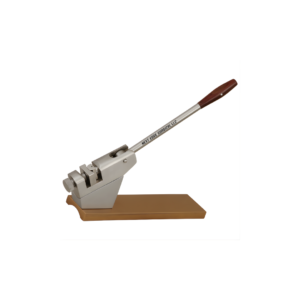
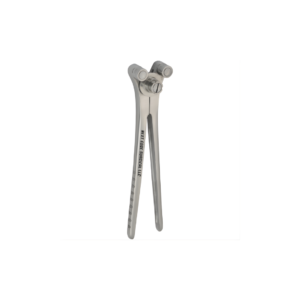
There is a particular kind of frustration in watching a well-selected plate rock against the bone because its curvature does not quite match. The 11-1743-00 plate bender addresses that gap directly, giving the surgeon mechanical leverage to reshape the plate rather than relying on the implant’s factory contour to fit every patient’s anatomy without adjustment.
Fit matters clinically, not just cosmetically. A plate that sits proud transfers stress unevenly across its screw holes once tightened, and that concentrated stress is where early loosening or fatigue failure often starts. Correcting the shape before final fixation, instead of accepting a compromise and hoping the construct holds, keeps the biomechanics closer to what was planned before the incision was made. This instrument is part of our broader line of bone surgical instruments built around that same principle of matching hardware to anatomy rather than the reverse.
In practice, surgeons reach for it during long bone trauma fixation, craniofacial and maxillofacial reconstruction, and revision procedures where earlier surgery has left the local bone surface different from what the plate was designed for. Surgical stainless steel construction and standard autoclave compatibility mean it processes through the same sterilization cycle as the rest of the tray, with no separate protocol required.
For surgical centers building a complete plating set, having a dedicated bender close at hand removes the delay of sending a plate out for reshaping mid case. It is a small instrument that protects a much larger outcome.
Equip your surgical team with this reliable instrument.
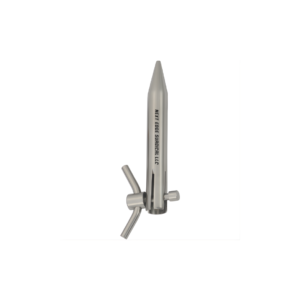
A Kirschner wire that goes in loose does not stay useful for long. Once a K-wire has been passed through bone and secured to an external fixation ring or bow, it needs to be brought under tension before the frame can bear load reliably, and that tensioning step is exactly what the 11-1744-18 wire strainer is built to perform.
Wire tension is not a minor detail in circular and Ilizarov-type frames. Insufficient tension leaves the wire able to flex under load, which translates into micromotion at the pin site, slower frame stability, and a higher chance of loosening over the course of treatment. This strainer applies controlled, incremental tension to the wire before it is locked at the bow or ring, giving the surgeon a repeatable way to reach the tension the frame was designed around rather than estimating by feel.
Where it fits into the workflow:
At 18cm (7 inches), it is sized for practical handling at the frame without crowding the operative field. Built in surgical stainless steel and compatible with standard autoclave sterilization, it integrates directly into external fixation trays alongside extension bows and related hardware. Surgeons setting up or restocking a frame kit will find it a necessary companion instrument rather than an optional extra.
Add this instrument to your orthopedic set.